
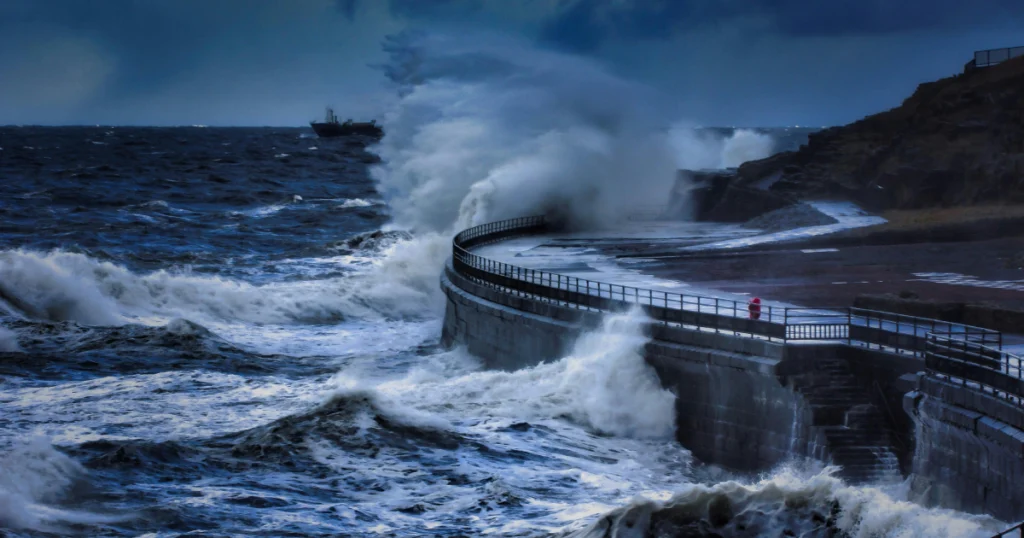
The marine environment is one of the most challenging service conditions for concrete. In addition to chloride, sulfate, and magnesium ions, wave action, abrasion, and continuous wetting–drying cycles cause both chemical and physical deterioration of concrete. Therefore, seawater-resistant concrete used in coastal and port structures requires not only high compressive strength but also, more critically, durability-oriented design.
The most important parameter determining service life is the permeability of concrete. The lower the permeability, the slower the ingress of harmful ions into the concrete; reinforcement corrosion is delayed, and maintenance costs are reduced. For this reason, correct binder selection plays a central role in the design of seawater-resistant concrete.
Binder systems containing Calcium Aluminate Cement (CAC) stand out as a strong option to increase durability in marine structures. The mineralogy of CAC, its hydration behavior, and its interaction with aggressive ions can significantly improve performance in marine environments. In this article, we will address the fundamental properties of seawater-resistant concrete and its various application areas, particularly port structures.
Why is Seawater-Resistant Concrete Necessary? Effects of the Marine Environment on Concrete
The marine environment is one of the most aggressive exposure conditions that concrete may encounter. Concrete is subjected to both chemical and physical multi-faceted attacks, and these effects can lead to early deterioration, reinforcement corrosion, and serious loss of service life in structures that are not properly designed. Therefore, concrete used in coastal and port structures must be designed as seawater-resistant concrete.
Chemical Effects
- Chloride Ions (Cl⁻): The Main Cause of Reinforcement Corrosion
Chloride ions present in high concentrations in seawater penetrate into the microstructure of concrete and break down the passive layer on the reinforcement surface. This is the most critical step required for the initiation of corrosion.
As corrosion progresses, expansion occurs on the reinforcement, and this expansion causes cracking and spalling of the concrete. This is the most common type of damage observed in coastal structures.
- Sulfate Ions (SO₄²⁻): Chemical Expansion and Microstructural Deterioration
Sulfates may cause expansive and weakening reactions in some binder systems. These reactions lead to cracks in the internal structure of concrete, loss of strength, and surface scaling. The sulfate effect is more pronounced especially in underwater and continuously saturated regions.
- Magnesium Ions (Mg²⁺): Weakening of the Binder Structure
Magnesium can dissolve calcium hydroxide in Portland cement-based systems and weaken the binder matrix. This reduces the binding capacity of concrete and negatively affects the long-term strength of the material.
Physical Effects
Seawater-resistant concrete must be designed not only to resist chemical effects but also to withstand physical stresses such as wave movements, abrasive sand effect, freeze–thaw cycles, and continuous wetting. These physical effects accelerate material loss especially in the surface zone of coastal structures; therefore, it is critically important that concrete has a dense and low-permeability microstructure.
The following physical effects must be considered in durability design:
- Wave action and abrasion: Surface losses and mechanical impact loads
- Abrasive sand effect: Surface abrasion caused by fine particles striking the surface with wave movement
- Freeze–thaw cycles: Microcracks formed due to volumetric changes of water in pores Continuous wetting–drying: Salt crystallization and surface stresses
- Thermal variations: Internal stresses in concrete caused by temperature differences between sun and water, negatively affecting long-term strength
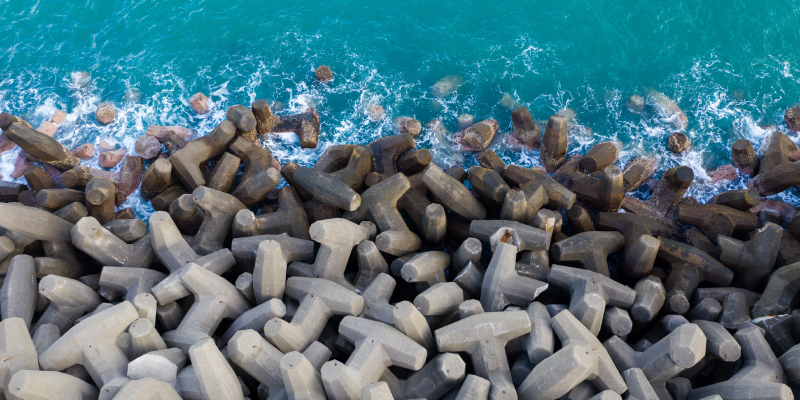
Why is Special Design Required?
Due to these multi-faceted chemical and physical effects, standard concrete mixtures are insufficient in marine environments. Truly seawater-resistant concrete must have the following properties:
• Low permeability
• High resistance to aggressive ions
• A microstructure that delays reinforcement corrosion
• A chemically stable binder system
• Design and curing that minimize crack formation
At this point, Calcium Aluminate Cement (CAC), thanks to its mineralogical structure, can provide a much more stable microstructure against the aggressive conditions of the marine environment.
What is Calcium Aluminate Cement (CAC)? Mineralogical Advantages for Seawater-Resistant Concrete
Calcium Aluminate Cement (CAC) is a special type of binder that differs significantly from Portland cement mineralogically due to its high Al₂O₃ (alumina) content. This clinker structure, composed of aluminate-based phases such as CA, CA₂, and C₁₂A₇, forms more stable hydration products against chloride, sulfate, and magnesium ions encountered in seawater.
The main reasons why CAC stands out in seawater-resistant concrete design are as follows:
- High early strength and rapid setting
One of the most distinctive technical properties of CAC is its very rapid setting and high early-age strength gain.
This provides major advantages especially in:
- Concrete casting in tidal zones
- Coastal elements where wave action starts rapidly
- Precast port blocks
- Repair and emergency maintenance works
Thanks to early strength, concrete can develop its resistance against aggressive marine effects in a short time.
- More stable microstructure against chloride ions
Due to its high alumina content, CAC forms aluminate-based hydration products that create a dense and low-permeability microstructure, primarily limiting chloride ingress rather than relying on classical chloride binding mechanisms.
- Natural resistance to sulfate attach
In CAC systems, the typical expansive sulfate reaction products commonly observed in Portland cement-based binders are largely reduced or absent.
- More stable binder against magnesium
Since free calcium hydroxide is not present in CAC binders, degradation mechanisms associated with magnesium attack are significantly less pronounced compared to Portland cement systems.
These advantages make CAC an ideal binder for applications requiring high durability in chemically and physically aggressive marine environments.
CAC Hydration and Conversion: Chemical Processes Affecting Seawater-Resistant Concrete Performance
The main factor determining CAC performance in marine environments is the phases formed during hydration and the transformations these phases undergo over time. When CAC reacts with water, metastable hydrates such as CAH₁₀, C₂AH₈, and AH₃ are formed at early ages. These hydrates form rapidly at low and moderate temperatures and are the main factor providing CAC’s known high early strength.
However, these metastable phases tend to transform into more stable structures over time. In this process, referred to in the literature as “conversion,” hydrates transform into denser and thermodynamically more stable phases such as C₃AH₆.

Similary:

This transformation may lead to some increase in porosity due to volume balance changes; therefore, parameters such as water/binder ratio, compaction, and curing are critically important in CAC-based concrete design. However, the C₃AH₆ phase formed after conversion is chemically highly stable and does not react with aggressive ions such as sulfate or magnesium. This is one of the important reasons why CAC is preferred in seawater-resistant concrete design.
The conversion rate varies depending on temperature. While metastable phases may remain stable longer at lower temperatures, conversion accelerates significantly when temperatures exceed 30°C. Therefore, especially in hot climates, proper mix design and mineral admixture optimization are important in concretes using CAC.
As a result, when properly managed through design, the hydration and conversion behavior of CAC forms a stable microstructure that supports long-term durability against seawater effects. Although conversion leads to the formation of thermodynamically more stable phases, it may also result in a reduction in mechanical strength if not properly managed; therefore, mix design and curing conditions are critical in CAC-based concretes.
Chemical and Mechanical Advantages of CAC in Seawater-Resistant Concrete Design
Calcium Aluminate Cement (CAC), due to its high alumina content, forms a highly stable binder structure against chloride, sulfate, and magnesium ions present in seawater. The chemical stability of hydration products makes CAC more resistant than Portland cement against typical deterioration mechanisms observed in marine environments.
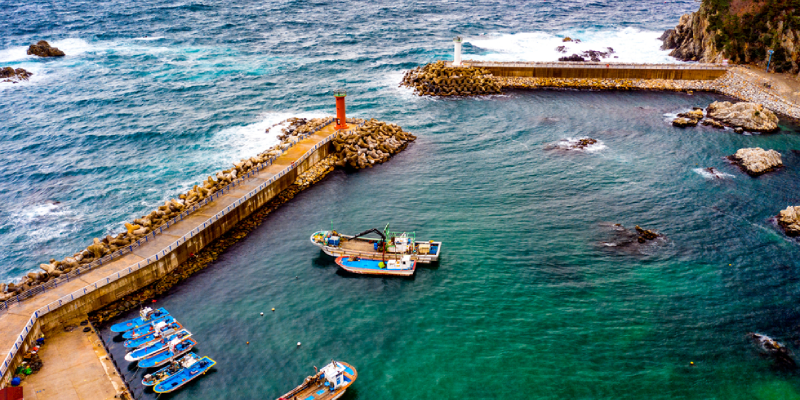
One of the most important advantages of CAC is that it does not form harmful expansive products by reacting with sulfate and magnesium ions. Stable phases such as C₃AH₆ and AH₃ formed after conversion do not react with aggressive ions; therefore, they do not create cracks or surface expansion within the concrete structure.
In addition, the aluminate-based microstructure limits the accumulation of chlorides in free form, delaying the initiation of reinforcement corrosion. This feature is one of the most critical factors extending service life in seawater-resistant concrete design.
CAC’s rapid setting and high early strength properties also provide a significant advantage in marine structures. In regions where tidal effects develop rapidly, in surfaces exposed early to wave and water movement, or in precast port elements, the ability of concrete to gain sufficient strength in a short time both facilitates application and reduces early-age damage risk.
With proper mix design, CAC forms a dense microstructure with low permeability. This structure reduces the effects of physical stresses such as salt crystallization, wetting–drying cycles, and surface abrasion. Thus, CAC strengthens both chemical durability and mechanical performance simultaneously, providing a reliable and long-lasting solution in seawater-resistant concrete design.
Mix Design and Application Recommendations for Seawater-Resistant Concrete
The main objective in seawater-resistant concrete design is to minimize the permeability of concrete and to obtain a dense microstructure that limits the progression of aggressive ions. For this reason, one of the most critical parameters in mix design is the water/binder ratio (w/b). Values of 0.40 and below are generally preferred; thus, capillary void content is reduced, and chloride diffusion is significantly slowed down.
Mineral admixtures such as fly ash, blast furnace slag, and silica fume can be used to achieve a more compact structure. In some applications, carefully selected mineral additions may be used together with CAC; however, hybrid binder systems require careful mix design and preliminary compatibility testing due to their influence on setting behavior and hydration kinetics.
Considerations for Mix Design When Using CAC
- Due to rapid setting and early strength, fresh concrete temperature and admixture dosage must be managed more precisely.
- Forming hybrid systems with mineral admixtures balances both the early strength advantage of CAC and the permeability-reducing effect of admixtures.
- Low w/b ratio (≤0.40), together with the high reactivity of CAC, reduces capillary voids and slows ion transport.
- If proper compaction (vibration) is not applied, the targeted low permeability cannot be achieved; therefore, special attention is required in reinforcement-dense zones.
Recommendations for Field Application and Curing
- Curing is critically important due to the rapid hydration of CAC; early moisture loss from the surface may increase the risk of microcracking.
- In areas with high wind, sun, and wave effects, curing duration should be extended or membrane-type curing materials should be applied.
- In coastal areas with high wetting–drying effects, protecting the concrete surface during the first 24–48 hours significantly improves early-age performance.
- Adequate concrete cover thickness is one of the most effective durability measures that extend the time required for chlorides to reach the reinforcement.
- In regions exposed to freeze–thaw cycles, appropriate air-entrainment design should be considered in addition to low permeability to ensure long-term durability.
- If site conditions are hot, fresh concrete temperature should be controlled against the rapid reaction rate of CAC, and cold water or cooled aggregates should be used if necessary.
Applications of Seawater-Resistant Concrete
Seawater-resistant concrete is preferred in projects targeting long service life in coastal structures where chloride exposure, sulfate attack, and abrasion loads coexist. Such concrete stands out particularly in surfaces, coatings, protection elements, and repair applications operating under intense physical and chemical exposure.
- Port, pier, and quay deck surfaces
Can be used to provide low permeability and high abrasion resistance on surfaces continuously exposed to wave action and seawater.
- Coastal protection elements
Preferred in breakwaters, seawalls, and revetment blocks, especially to increase durability in surface coatings or thin mortar applications.
- Splash zone surface coatings
In this aggressive region where salt deposition and continuous wetting–drying cycles occur, the rapid setting and early strength properties of CAC provide advantages.
- Repair and strengthening mortars
Ideal for applications requiring rapid setting, early strength, and chemical stability in the surface repair of structures exposed to seawater.
- Artificial reef elements and underwater modules
Provides advantages of low permeability and chemical durability in elements such as artificial reef blocks that must remain stable underwater for long periods.
- Precast coastal elements
Can be used in blocks, paving units, and other non-structural precast elements requiring rapid production and early demolding.
- Infrastructure detail mortars
CAC-based mortars are widely used in grout, anchorage fillings, connection points, and details exposed to seawater to provide chemical durability.
As Çimsa, we have addressed topics such as the properties and application areas of seawater-resistant concrete. To learn more about our services and the world of concrete, you can visit other articles on our blog.
Resources
- Scrivener, K. L., John, V. M., & Gartner, E. M. (2018). Eco-efficient cements: Potential and challenges. Cement and Concrete Research, 114, 2–26.
- Neville, A. M. (2011). Properties of Concrete (5th Edition). Pearson Education.
- Mehta, P. K., & Monteiro, P. J. M. (2014). Concrete: Microstructure, Properties, and Materials. McGraw-Hill Education.
- Hewlett, P. C., & Liska, M. (2019). Lea’s Chemistry of Cement and Concrete (5th Edition). Elsevier.
- ACI Committee 357. Guide for the Design and Construction of Fixed Offshore Concrete Structures. American Concrete Institute.
- EN 206. Concrete – Specification, performance, production and conformity.
Frequently Asked Questions
Why does seawater damage concrete?
Seawater attacks concrete chemically and physically. Chloride ions break down the passive layer on reinforcement and initiate corrosion, sulfate ions cause expansive reactions and cracking, and magnesium ions dissolve calcium hydroxide and weaken the binder matrix. Wave action, abrasive sand, freeze-thaw cycles and continuous wetting-drying add surface losses, so unprotected concrete deteriorates early and loses service life.
What makes Calcium Aluminate Cement (CAC) suitable for marine structures?
CAC has a high Al₂O₃ content with aluminate phases such as CA, CA₂ and C₁₂A₇ that form stable hydration products against chloride, sulfate and magnesium ions. It sets rapidly, gains high early strength, contains no free calcium hydroxide, and largely avoids expansive sulfate reaction products, creating a dense, low-permeability microstructure that delays reinforcement corrosion in marine environments.
What is conversion in CAC hydration?
When CAC hydrates, metastable hydrates such as CAH₁₀, C₂AH₈ and AH₃ form at early ages and later transform into the denser, thermodynamically stable C₃AH₆ phase. This conversion may increase porosity and reduce mechanical strength if not managed, and it accelerates above 30°C, so water/binder ratio, compaction, curing and mix design are critical in CAC-based concretes.
What water/binder ratio is recommended for seawater-resistant concrete?
Values of 0.40 and below are generally preferred for the water/binder ratio. A low ratio reduces capillary void content and significantly slows chloride diffusion. Mineral admixtures such as fly ash, blast furnace slag and silica fume support a more compact structure, while proper compaction, extended curing and adequate concrete cover thickness further limit the ingress of aggressive ions.
Where is seawater-resistant concrete used?
Typical applications include port, pier and quay deck surfaces, coastal protection elements such as breakwaters, seawalls and revetment blocks, splash zone surface coatings, repair and strengthening mortars, artificial reef elements and underwater modules, precast coastal elements, and infrastructure detail mortars like grout and anchorage fillings. These uses combine chloride exposure, sulfate attack and abrasion loads with long service life targets.
Sibel Kurt Sönmez
Marketing Executive, Çimsa
She works on the development and positioning of white cement and calcium aluminate cement (CAC) solutions across global markets. At Çimsa Blog, she writes technical and industry-focused content on specialty cements, advanced building materials, and innovative construction solutions.
LinkedIn Profile